


This morning, Pew Research Center published an analysis debunking claims of a Christian revival among young adults in the UK. Their verdict? Those viral surveys showing young Brits flocking back to church were based on opt-in panels—self-selected respondents who signed up for surveys, often for small payments. When you look at rigorous random-sample surveys like the Labour Force Survey and British Social Attitudes survey, there’s no revival. Christian identification among young adults is actually declining.
Score one for good methodology.
But I think Pew’s own rigorous data on American young adults might be missing an equally important story about what’s actually happening with religion across younger generations.
In their report last month on U.S. religious trends, Pew found that each birth cohort looks “pretty stable” in recent years—no dramatic increases or decreases in religiosity since 2020. Young adults today are less religious than older Americans, but this generation is NOT significantly more or less religious than they were five years ago. At least according the data.
Except: I spend my days with Gen Z college students, and I hear constantly from Millennials and Gen Xers who recognize themselves in conversations about contemporary spirituality. And as a religious studies scholar, I see religious engagement everywhere that these surveys don’t capture.
The surveys are asking the wrong questions—and have been for decades.
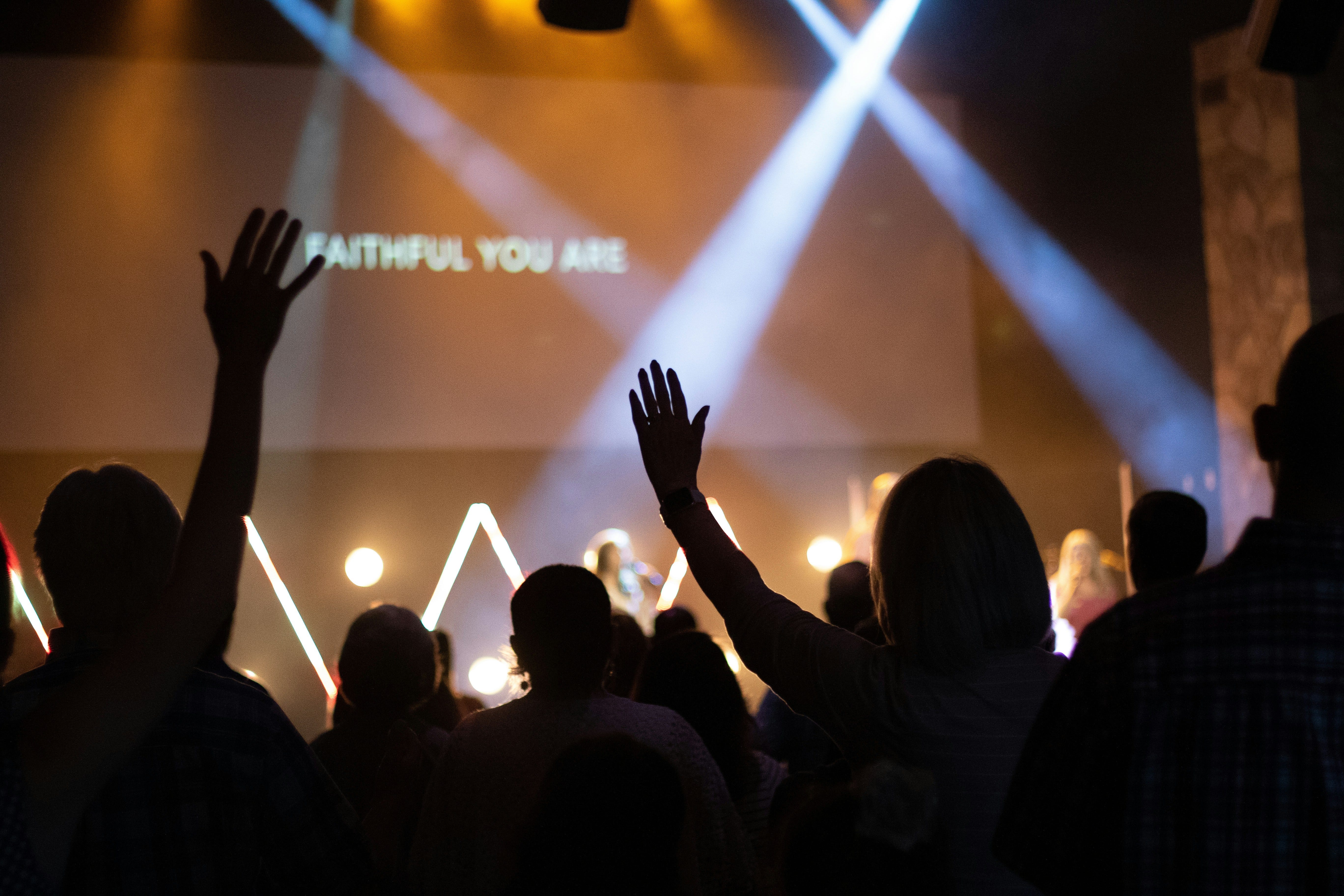
When Pew asks “do you identify with a religion?” or “how often do you attend religious services?”, younger generations hear: “Are you institutionally affiliated with organized religion?” And they answer, correctly: No.
Then they go home and do yoga. Check their horoscope. Listen to a meditation app. Experiment with manifestation. Seek mystical experiences through psychedelics. Find collective effervescence in their Soul Cycle class. Read about “ancient wisdom traditions” on Instagram. Talk about their “healing journey.” These are the practices I catalog in my forthcoming book Beyond Wellness—and every single one of them involves religious logic, borrowed religious practices, or engagement with questions of meaning, transcendence, and moral formation.
But none of it registers on surveys about “religion.”
This didn’t start with Gen Z. Millennials pioneered many of these practices—they’re the ones who made yoga studios ubiquitous and turned astrology from a punchline into a cultural force. Gen X started the institutional skepticism even earlier, started the process of making “spiritual but not religious” or “none” popular identity categories.
But Gen Z is the first generation to come of age entirely within this restructured religious landscape. They have no memory of when attending church was the default, when “spiritual but not religious” seemed like a contradiction, when you couldn’t find a meditation app or a sound bath or a workshop on “sacred psychedelics.” For them, this IS what religious seeking looks like.
But Gen Z is the first generation to come of age entirely within this restructured religious landscape. They have no memory of when attending church was the default, when “spiritual but not religious” seemed like a contradiction, when you couldn’t find a meditation app or a sound bath or a workshop on “sacred psychedelics.” For them, this IS what religious seeking looks like.
And our surveys have been missing it the entire time—not just with Gen Z, but across 30+ years of religious change.
The problem is that the framework of these surveys often assumes religion looks like what it looked like for Boomers and the Silent Generation: institutional affiliation, regular attendance at houses of worship, explicit identification with a named tradition.
But Gen X began systematically rejecting institutional affiliation in the 1990s—not just religious institutions, but political parties and civic organizations. Millennials accelerated this trend. Gen Z has inherited a world where institutional skepticism is simply common sense.
Rejecting institutions is not the same as rejecting the religious questions those institutions used to address: What gives my life meaning? How should I live ethically? What communities do I belong to? How do I deal with suffering? What transcends my individual existence?
Younger generations are absolutely engaging with these questions. They’re just doing it in ways our surveys can’t see.

What would better questions look like? Instead of “do you attend religious services?”, we might ask: “Do you engage in practices aimed at cultivating meaning or purpose?” “Have you sought out communities focused on shared values or transcendent experiences?” “Do you draw on ancient wisdom traditions—whether or not you identify with them formally?”
We need to ask about meaning-making. About ethics and moral frameworks. About experiences of transcendence or connection to something larger than themselves. About where they turn when they’re seeking healing or transformation.
These questions would reveal religious engagement that looks nothing like church attendance but everything like the religious work humans have always done.
I’m not arguing Gen Z or Millennials are secretly Christian, or that we should count astrology as “religion” for institutional purposes. I’m arguing that as scholars and researchers, we’re using twentieth-century metrics to measure twenty-first-century religious change—and then declaring confidently that we know what’s happening with younger people.
We don’t.
Pew is absolutely right to push back on methodologically sloppy surveys claiming revivals that aren’t happening. Their rigorous approach is exactly what we need. But even rigorous surveys will miss the actual story.
Something IS shifting with younger generations and religion—has been shifting since at least the 1990s. I see it in my Gen Z classroom. I hear it from Millennials and Gen Xers who tell me my work on wellness culture resonates deeply with their experience. It’s in the questions they ask, the practices they experiment with, the communities they create, the moral urgency they bring to social and political questions.
Something IS shifting with younger generations and religion—has been shifting since at least the 1990s. I see it in my Gen Z classroom. I hear it from Millennials and Gen Xers who tell me my work on wellness culture resonates deeply with their experience. It’s in the questions they ask, the practices they experiment with, the communities they create, the moral urgency they bring to social and political questions.
It doesn’t look like their grandparents’ religion. It might not even look like “religion” to surveyors.
But it’s there. It’s been there. And we keep measuring the wrong things.
So here’s my plea: Stop declaring younger generations secular (or uniquely religiously conservative) based on surveys that only measure one kind of religious engagement. Start developing better tools (including qualitative ones) to understand how Gen X, Millennials, and Gen Z have been doing the religious work of meaning-making, community formation, and ethical living for decades—even when they reject the label “religious.”
This is a challenge for all of us—survey researchers, religious studies scholars, sociologists, journalists. We need to keep questioning our inherited categories and assumptions. What counts as religious? What are we trained to see, and what are we missing? This conversation needs to continue, because the stakes are high: getting the story wrong means misunderstanding how entire generations make meaning, build community, and navigate moral questions.
Right now, we’re measuring the wrong things. We have been for 30 years. And that means we’re missing the real story of how multiple generations have reshaped American religion—not by joining churches, but by building entirely new forms of religious engagement that our surveys aren’t designed to see.
If you enjoyed this post, please like, comment, or share it. Doing so helps others find the newsletter!
Pew keeps asking “do you go to church?” while Gen Z is out here doing breathwork, astrology, mutual aid, psychedelics, and therapy like it’s a sacrament. No revival, no collapse. Just people doing the God-question without the building.
Thanks so much for this, Liz. Totally agree, and some colleagues and I have been writing about this in the hopes of persuading some of our fellow sociologists of religion (https://osf.io/preprints/socarxiv/jr6fu_v1). Adding your book to our list of examples!